
Why Investing in Employees Pays Off
What if one of the smartest investments your company could make isn't a new piece of technology, a bigger office, or another marketing campaign- but your employees?
Employees who feel valued are more likely to be engaged, motivated, and committed to the organizations they work for. Investing in employees isn't simply about offering more perks. It's about creating a workplace where people feel that their contributions matter.
Employees Who Feel Valued Are More Engaged
Employees are more likely to feel connected to their work when employers demonstrate that they care about more than productivity. No one enjoys being at a place where they don't feel welcomed/cared about.
There are many ways to invest into your employees. Some examples are:
Meaningful benefits - Insurance, travel, retirement, gas, etc. can go a long way in helping employees.
Recognition - Recognition for the hard work they have put in, also recognizing that employees need time away from work.
Professional development - Being able to help/offer opportunities for growth, and offering praise of growth.
Flexibility - Life happens, and it doesn't always go the way people want. Being flexible is a normal part of life and some employees are going to need or ask for your flexibility.
Wellness - Along with flexibility, people get sick. Making it a point to reach out if they are not feeling well, or providing benefits that can improve the wellness of their employees can go a long way.
Time away from work - Work is not a break. People need breaks for their mental and physical health.
Great Benefits Can Help Attract Talent
Those that are actively looking for a job or career don't just look at the salary or hourly pay anymore.
The benefits that were mentioned earlier are great benefits that will help companies stand out to employees for a new job or career. Memorable benefits can help employers stand out when competing for talent.
For example:
Imagine being able to tell a prospective employee, "Our company offers a travel benefit that helps you save on the experiences you care about."
That's much more memorable than simply saying "We offer competitive benefits."
Investing in Employees Can Improved Retention
Replacing employees is expensive and disruptive with recruiting expenses, training and ramp-up time, and lost productivity.
Companies can also lose:
Institutional knowledge
Team relationships
Training investments
Customer relationships
Employee benefits aren't a magic solution to turnover, but they can contribute to a workplace where employees feel valued and supported.
Experiences Can Be More Meaningful Than Traditional Perks
Similar to what we previously talked about, instead of another compnay-branded water bottle or office snack bar, consider benefits that employees can take home with them-literallly.
Travel benefits are more meaningful than traditional perks and can include employee's families as well. Travel benefits can create:
Family memories
New experiences
Cultural connections
Personal growth
Rest and relaxation
Adventures
These benefits go beyond the workplace.
Investing in Employees Builds Company Culture
Benefits communicate what to the employees what the company cares about and what their priorites are.
For example:
Flexible PTO:
"We trust you."
Professional development:
"We believe in your potential."
Wellness benefits:
"We care about your well-being."
Travel benefits:
"We want you to enjoy your life outside of work."
Employees are looking for more than just great pay. Many employees want a company that is going to care about them and what the employees care about.
Employee Investment Can Create A Ripple Effect
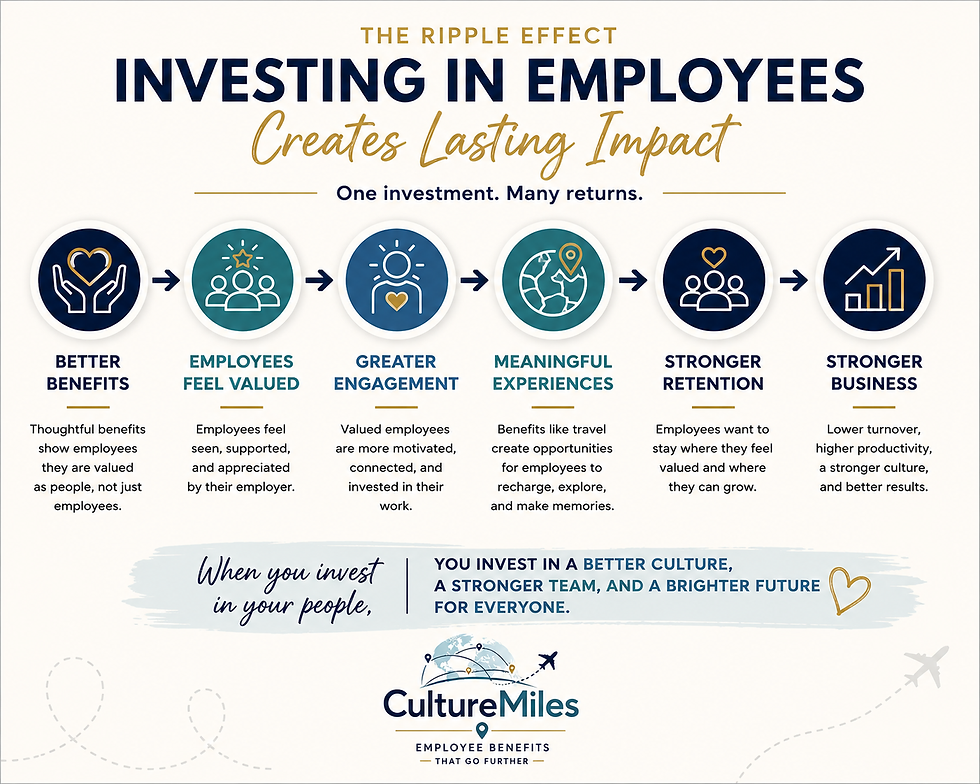
Employee investment can affect more than just one employee. It creates a ripple effect that can positively affect the entire company.
For example:
Better benefits
↓
Employees feel valued
↓
Greater engagement
↓
Stronger workplace culture
↓
Better retention
↓
Stronger employer brand
It's Not About Offering More- It's About Offering Better
The whole point of this blog post is not to overwhelm or guilt employers into getting every benefit possible for your employees, but find better benefits that your employees find value in.
Instead, employers should ask:
Do our benefits actually matter to our employees?
A smaller number of meaningful benefits can be more valuable than a long list of perks employees rarely use.
How Employers Can Start Investing In Their Employees
Whether you've asked the previous question, or you are looking for more or better benefits, here are a few steps you can take to start investing in your employees.
Ask employees what they value.
Look at your current benefit utilization.
Identify gaps in your benefit package.
Encourage employees to actually use their benefits.
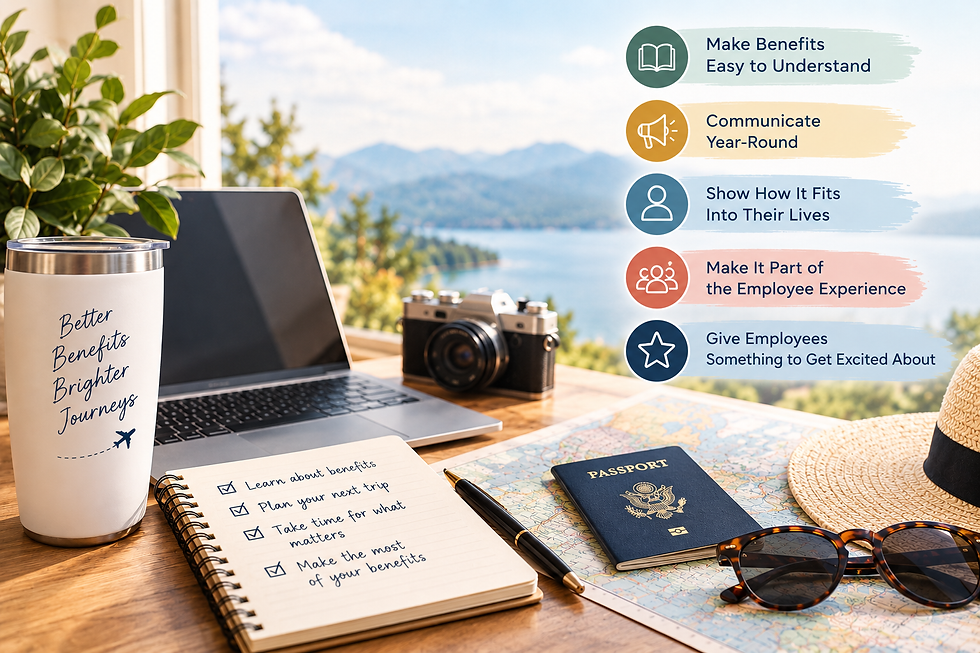
Communicate the value of your benefits regularly.
The last one can be crucial with employees. A benefit employees don't know about is a benefit they can't use.
Final Thoughts
Investing in employees isn't simply about spending more money on benefits. It's about creating meaningful value for the people who make your business possible.
The strongest employee benefits don't just benefit employees while they're at work. They improve the lives they're living outside of work, too.
Because when employees feel valued, supported, and appreciated, everyone wins.
Invest in your people. Invest in your culture. Invest in experiences that go further.
CultureMiles helps employers offer a travel benefit designed to give employees more opportunities to explore, experiences, and make memories - because the benefits of a great workplace shouldn't end when the workday does.


Comments